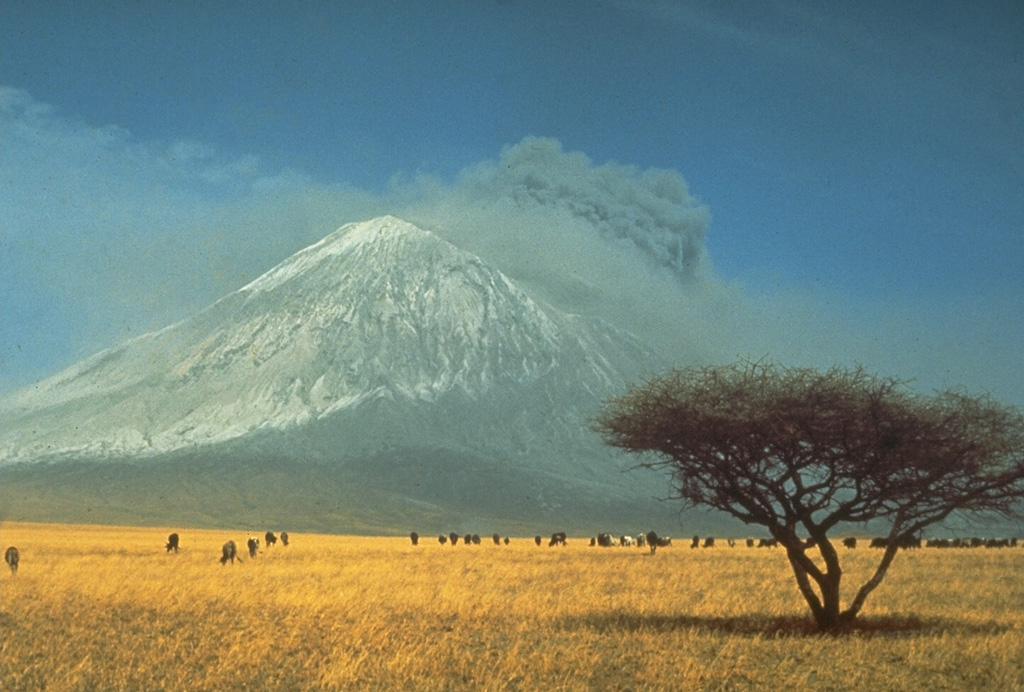
Volcano Ol Doinyo Lengai
The only active volcano on Earth that erupts natrocarbonatite lava, so low in silica that it flows like black oil at about 500 °C and turns white within days as it reacts with moisture. It rises above the East African Rift in northern Tanzania and is sacred to the Maasai as the 'Mountain of God'.
Last eruption
Erupted since 2000
Summit
Stratovolcano · Foidite
Activity
0 events (1.0x rate)
Interactive Volcano & Seismicity Map
Seismicity within 50 km radius, active VAAC ash plumes, and tectonic plate boundaries.
Recent seismicity within 50 km
0 events in the last 12 h within 25 km of the crater.
No catalogued earthquakes within 50 km in the last 90 days.
Geological & Tectonic Profile
StratovolcanoOl Doinyo Lengai is an active Stratovolcano formed in an active Rift zone / Continental crust (> 25 km). Dominant lithology: Foidite.
Volcano Dossier
VN #222120Official catalogue parameters, coordinates, elevation and geotectonic classification.
Authoritative Monitoring Infrastructure
Frequently Asked Questions (FAQ)
Verified scientific, operational, and emergency protocols
Catalogue: Smithsonian Institution, Global Volcanism Program.Smithsonian GVP profile