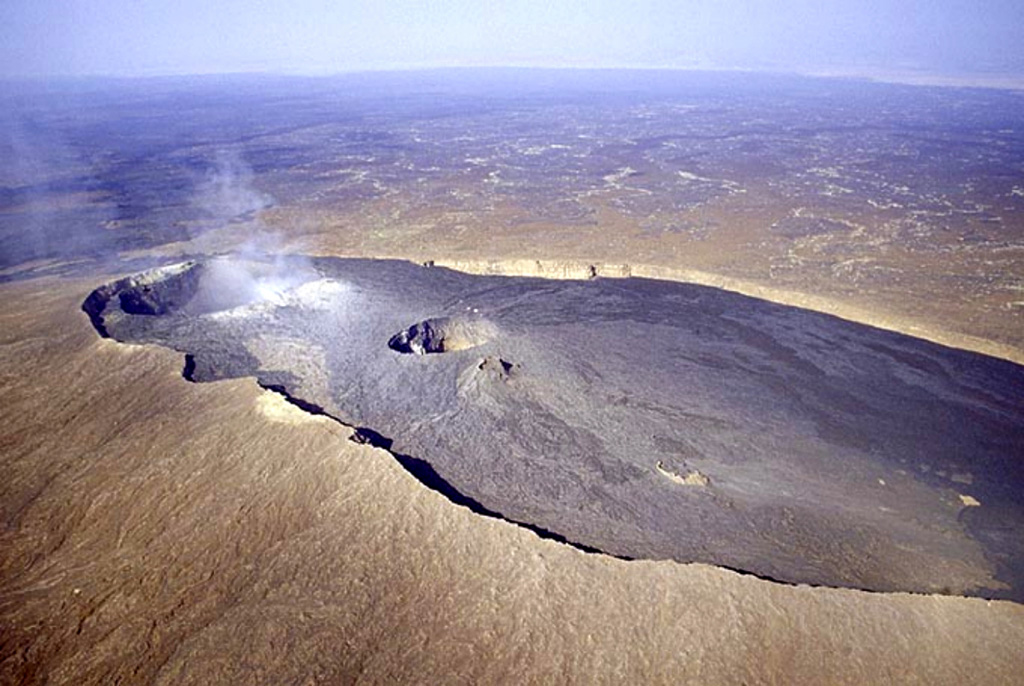
Volcano Erta Ale
A shield volcano in Ethiopia's Afar Depression, one of the hottest and lowest places on Earth, famous for one of the longest-lived lava lakes on the planet, active since at least the early 20th century. In 2017 a flank fissure opened and drained the lake, and activity in its craters has shifted repeatedly since.
Last eruption
Erupted since 2000
Summit
Shield volcano · Basalt / Picro-Basalt
Activity
0 events (1.0x rate)
Interactive Volcano & Seismicity Map
Seismicity within 50 km radius, active VAAC ash plumes, and tectonic plate boundaries.
Recent seismicity within 50 km
0 events in the last 12 h within 25 km of the crater.
No catalogued earthquakes within 50 km in the last 90 days.
Geological & Tectonic Profile
Shield volcanoErta Ale is an active Shield volcano formed in an active Rift zone / Intermediate crust (15-25 km). Dominant lithology: Basalt / Picro-Basalt.
Volcano Dossier
VN #221080Official catalogue parameters, coordinates, elevation and geotectonic classification.
Authoritative Monitoring Infrastructure
Frequently Asked Questions (FAQ)
Verified scientific, operational, and emergency protocols
Catalogue: Smithsonian Institution, Global Volcanism Program.Smithsonian GVP profile