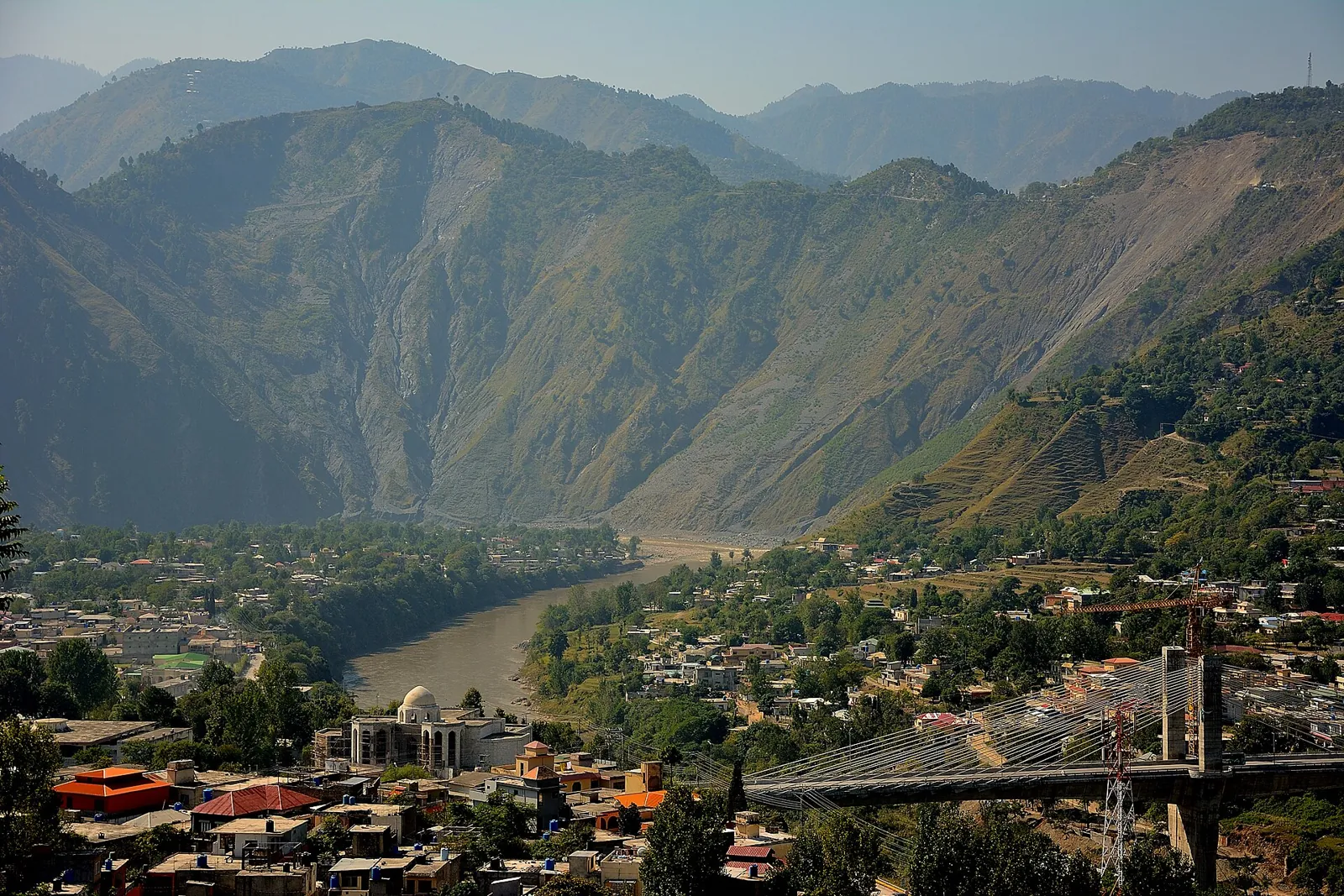
Earthquakes in Pakistan Today
Pakistan straddles the western edge of the India–Eurasia collision, with thrust faults in the north, the Chaman strike-slip fault along the Afghan border and the Makran subduction zone off the southern coast. The 2005 Kashmir earthquake (Mw 7.6) killed more than 80,000 people in the north.
Danger Level (72h)
72-hour composite hazard forecast
Recent Quakes (30d)
Recorded in the last 30 days
Max Magnitude (30d)
Largest earthquake in the last 30 days
Pakistan is seismically quiet in our catalogue. The tectonic background below explains why, and what would change it.
Badakhshan, Afghanistan
20d ago•115.8 km•Felt by about 3,246,823 people
Recent earthquakes
17Counts cover the seismic belts this platform monitors in Pakistan, not its administrative borders. A monitored belt can reach across a border, and events there are listed with the country of their epicentre.
Monitored regions
Tectonic setting
Pakistan straddles the western edge of the India–Eurasia collision, with thrust faults in the north, the Chaman strike-slip fault along the Afghan border and the Makran subduction zone off the southern coast. The 2005 Kashmir earthquake (Mw 7.6) killed more than 80,000 people in the north.
Frequently asked questions
How often do earthquakes occur in Pakistan?
Our catalogue recorded 17 earthquakes across the 1 seismic belts monitored in Pakistan over the last 30 days, the strongest reaching M5.2.
Why are there so many earthquakes in Pakistan?
Pakistan straddles the western edge of the India–Eurasia collision, with thrust faults in the north, the Chaman strike-slip fault along the Afghan border and the Makran subduction zone off the southern coast. The 2005 Kashmir earthquake (Mw 7.6) killed more than 80,000 people in the north.
What was the strongest earthquake in Pakistan?
The strongest earthquake in Pakistan in our historical catalogue is the M8.1 event of November 27, 1945. Death toll: 300.
What is the emergency number in Pakistan?
The emergency number in Pakistan is 1122, answered by Rescue 1122 (most provinces; police 15, ambulance 115). After strong shaking, keep the line free for those trapped or injured and check official channels for aftershock and tsunami advisories.
Who monitors earthquakes in Pakistan?
The national seismic authority is Pakistan Meteorological Department (PMD). EarthquakeLive cross-checks its bulletins against 18 international networks, so an event may appear here with a slightly different magnitude until the agencies converge on a final solution.